When you look at the first ten years of John Calipari’s tenure at Kentucky, it may be the most successful run in the modern era of college basketball. In that span, the Wildcats won 30 NCAA Tournament games, appeared in seven Elite Eights and four Final Fours, and won the 2012 National Title. However, there is one blemish, the 2012-13 team. The lone team in that span not to win an NCAA Tournament game, or even make the NCAA Tournament.
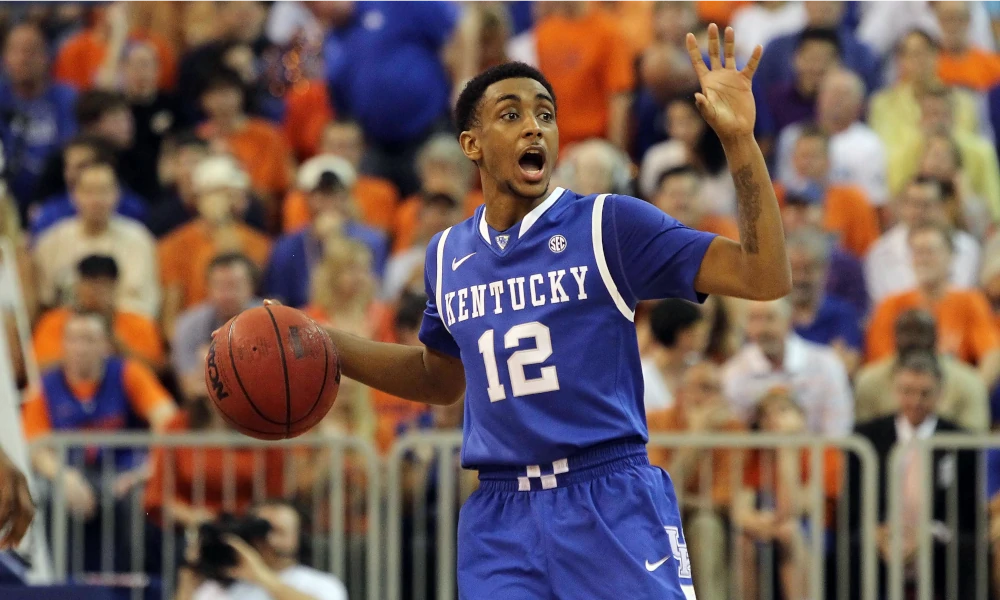
Coming off a National Championship, expectations were just as high. The Wildcats brought in another No. 1 recruiting class of four top freshmen, highlighted by Nerlens Noel, and returned Kyle Wiltjer. Then you had Ryan Harrow, who was supposed to lead the team as the point guard after sitting out a season after transferring from NC State.
As we know now, it was a failure. That team went 21-12 and lost in the first round of the NIT to Robert Morris. Harrow, once one of the most anticipated (just look at his mixtape), turned into one most criticized players of the Calipari era.
Advertisement
Now thirty-two years old, Harrow looks back and tells Kentucky Insider, “Those two years of my life, it turned me into the man I am now”. While difficult, Harrow was able to grow from his experiences. He also met his wife while at Kentucky and they have a six-year-old daughter.
Let’s get into the interview.
Everyone has their own journey. You went to NC State out of high school, but decided to transfer after your coach left. What was it like to be recruited by John Calipari and Kentucky? What was the pitch that sold you?
“It was amazing to be recruited by Kentucky. The lineage of point guards that Calipari has had, and to be considered one of the point guards that Calipari wanted to run his team was a great feeling.”
You had to sit out that first season because of the rules at that time. What was it like to practice with that 2011-12 title team?
“At first, it was hard. I can’t lie. They used to be picking on me for sure. That team had seven NBA players. Once the year started to go on, those guys were making me better. Just seeing them play and how close they were and how in tune they were with each other. Everybody really knew their role and didn’t step outside of that. That resulted in a national championship.”
Advertisement
Was there a moment you realized that that team would win the national title?
“I had two moments. I first knew we were going to be pretty good that summer. That was the NBA lockout year and there were so many NBA teams and players coming to play at Kentucky that year. They weren’t just beating us, we were competing against them. It was the (Oklahoma City) Thunder, the (Cleveland) Cavs. Rondo was in there, John (Wall), Demarcus (Cousins). There was a lot of people. The way I saw our boys compete against them, I was like ‘okay, we’re going to be pretty good this year.’”
That was the Thunder team that ended up going to the NBA Finals that season, with three future Hall of Famers in Kevin Durant, James Harden, and Russell Westbrook.
“Yeah. It was me, AD, Darius Miller, and two other players. We were competing. It was like kings of the court, if you lost you had to go the girl’s gym across the hall, the winners stayed in the boy’s gym. I remember going to the girl’s like one time. So, we were competing for sure.”
The second moment?
“The second moment was when we beat UNC at home. For us to be so young and we still beat UNC. I was like ‘okay, I see something happening here.’”
Going into the next season, you’re prepared to be the starting point guard and the unexpected happens with your dad having a stroke. What kind of toll, especially mentally, did that take on you?
“Man, it really wiped me out for real. I am such a big family guy. Obviously, I don’t want anything to happen to my father. To this day, my father still can’t use his left hand, left arm like he used to. You can imagine what it was like when it first happened.
Advertisement
When it first happened, my family didn’t even tell me because they know how I much I love my family. A week or two had already went by, they told me and as soon as they did I was like ‘Okay, I’m coming home’. That wasn’t really accepted by everybody — Basketball is very important at Kentucky. If you stay focused and do the right things everything can be taken care of. But I was young at that time and just didn’t realize that other people could care for my dad while I just stayed focused on basketball, and everything could be different in a year. I was just so focused on ‘something’s wrong with my dad, he’s not the same.’”
At a place like Kentucky, where everything is magnified. Your dad is sick, rumors are going on about a mysterious flu, a portion of the fanbase making you the scapegoat. Can you explain what that pressure was like with all that was going on? That must be a lot for a college kid.
“It was crazy at that time. I look back at it now, older and wiser. It was crazy because not every kid that goes to college is a top 25 recruit. Not every kid that goes to college gets to play at Kentucky. It was a lot of pressure. That was the kid in me focusing on pressure, pressure, pressure. But not thinking man you’ve been working hard, they lace your shoes up just like you lace yours up. Just go out there and play and it will all work out. I was just putting so much pressure on myself mainly because I thought I was one of the most talented guards in college basketball. It was just a different way I played, and it wasn’t really accepted the way that it Is now.”
As far as fans knew, you left for a week and rumors started flying. Few knew about your father’s health at the time, would you be more open about that if you were to do it all again? Was that your choice or Kentucky’s?
“It was a mutual thing with the team and I. Definitely wanted to play, but my mind was just in a terrible state. I was going to counseling while I was at Kentucky. Nobody knew. I would go to practice. Then I might go to counseling one day, or I might just be sitting in my room in the dark all day. I am taking medicine that the counselors gave me that’s not making it any better, it seems like it’s making it worse. Then I’m going to practice and after practice, I feel like I’m not getting better or I am letting the team down. It was just a lot at the time. But now, thirty-two-year-old me, I think it was weak on my behalf. To not go out there and handle business because my life could be totally different right now.
I don’t regret not being so transparent, you don’t want everyone knowing your business. But at the same time, some people, some of the fans may have been more sympathetic. I was more worried about what the coaches were thinking, but it was just I really wasn’t trying to play basketball at the moment, it wasn’t my biggest thing at that time.”
Advertisement
Mental health is a much more discussed topic today than it was then. Do you feel if there were more resources (i.e. sports psychologist) at the time, it would have changed your career at Kentucky?
“I will say Kentucky did do a lot with trying to help get me back right. But they tried to do it in a short span of time. I think if it (mental health) was more accepted like it has been since Kevin Love and DeMar DeRozan came out, then probably. Kentucky could get any resources they want, they just thought ‘There’s nothing wrong with this kid, he’s just not playing well. He’s saying it’s his father, there’s something wrong with his head’. They sent me to a therapist, but the therapist didn’t make me feel better, so I was like ‘This is a waste’. I started taking medicine, but the medicine didn’t make me feel better. They started making me stay around, like I stayed at Coach Cal’s house for a few nights, but that didn’t help. Nothing really helped me at that time.
They even brought my mom out there, which they hated. That just added more fire to the ‘Oh, he’s weak. He can’t do this’. That’s what I would hear all season from them. ‘You’re just so weak, what’s wrong with you? You weak as hell’. These are my coaches saying that.
I understood that it was important to go out and perform because your life could change. That’s all the coaches would try to say. They knew I was talented enough and if I could just go out there and play like myself, my life could change.”
Which specific coaches were saying these things to you? Was it the assistant coaches? Or was it Calipari?
“It was everybody, I can’t even lie to you. I can say that Coach O was the one that worked with me the most with being patient. Coach Strickland couldn’t do much because he wasn’t an actual coach at that time. Kenny Payne was actually the guy that recruited me the most and he was just so disappointed that I couldn’t go out there and perform. He (Payne) had been watching me since I was high school. Cal is more of a, I don’t want to say insult you, but I’ll say ‘I’m going to talk to you how I want to talk to you and let’s just see how you react’. He’s really just testing you.
Advertisement
Cal is a great guy, a great coach. There’s just different ways to coach different people. He wanted those rough, rugged, kids. That just wasn’t me. I just go out there and play. With the way I played, it was like ‘you’re even more weak than I expected’. Stuff just started compounding.”
Was there ever a coach to play “good cop”? Like Kenny Payne, Coach O?
“Yeah, they were definitely trying to help me. Everybody tried to help me. But after so long you can’t really be focused on one kid out of a team of kids that are trying to go out there and give it their all. I played really well for a stretch, but the switch in my mind, it just kept going up and down. That was pretty much when I lost the team. Nobody wanted to deal with what I had going on. They were focused on winning. Now that I am older, I am like ‘yeah, I understand.’”
Obviously, the next year things didn’t go as planned. What was different about that 2012-13 team that ultimately led to an NIT birth?
“We definitely weren’t as close as that last team and that for sure played a role. Everybody on the last team, they all knew their roles, they all were okay with their roles. Our team was talented, but the leader, which was me, I just wasn’t in it 100% mentally. I don’t want to say it divided the team, but people had their own cliques and opinions on the team.
What’s crazy is that if you look at our team we had 10 losses in. The year after us, they had 11 losses. They won more games because they went so far in the postseason. That team just happened to click at the right time and turn that switch.”
Advertisement
Given how creative you were as a scorer and ball handler, I am sure you wish you had more freedom. How do you feel that Cal limited you?
“It was trash. I know my skill level, my talent. But also, I really didn’t do my due diligence in how Cal’s point guards played. It was just, you know, you go play for Cal, you go to the NBA. It was hard to leave N.C. State, my blood brother was playing with me. I was just thinking Calipari had Derrick Rose, John Wall, Brandon Knight, Marquis Teague.
But if you really sit back and think about all those players, very fast, very strong, and they’re not doing too much with the ball, they are just going and getting one. That’s not my game. Yes, I’m fast, but I used my dribbling as a substitute for strength. I was real skinny. I could dribble and move someone where I wanted them to go. When I couldn’t be myself, I was always second-guessing myself. ‘Should I do this? What if I try this? Keep it simple.’ I look back at my games at Kentucky, and I don’t think you see myself put the ball between my legs twice in any clips. It’s just crazy to look back and see that it really wasn’t me out there playing, but it was me trying to fit in.”
Looking back at it, would you have picked a different school?
“That’s the thing, at that time, what coach was giving a kid that level of freedom? That wasn’t happening at your big schools. Even at NC State, they told me ‘You’re going to start, you’re going to do this’. I get there and other players are having a problem with how well I am doing. They bring me into the office and tell me ‘You have to wait til next year, it’s this player’s turn’. Like what?
That’s why I say I don’t want to coach. I don’t say it because the coaches are bad guys, but the relationships that I thought I had with them and how they turned out, I don’t even want that to happen.
Advertisement
I get to Kentucky. They pulled me and Kyle Wiltjer in and said ‘You two are the most talented players on the team, you all are going to have to get us these wins this year. Plus, you all know the championship pedigree’. Then we start playing and it’s a whole different thing.
I leave there and get to Georgia State. I am playing on a team with a coach that is coaching his kid, and his kid is good, he ain’t just some slouch. Coming from Kentucky, in all honesty, I’m like ‘I don’t think you are good, I don’t know what you can do’. One of my first games at Georgia State I had 27 points against Vanderbilt. Just a few months earlier, I only scored 4 points against Vanderbilt when I was at Kentucky. I didn’t get that much better in that time.
College just wasn’t for me, I am going to be honest. I begged my mom to let me go overseas out of high school, but she just wasn’t going for it. I knew it wasn’t for me before I even left high school for college. It was too structured.”
Overall, what did you learn from the Kentucky experience? How is it helped you in life and your career?
“Overall, those two years of my life, it turned me into the man I am now. Because there was so much going on. You have one year where everybody is so excited for me to be there and then you see that team that won the national championship. That was a wonderful experience. I was excited to play there next year because my boys just won it the year before. I felt like we were getting a whole bunch of good recruits in. Then my dad had the stroke and everything made like a complete 360 and I didn’t know how to cope with it. I had to grow up, keep playing, finish the year out. At the end of the year, both sides decided it was probably best I go elsewhere. That was it.”
Advertisement
Playing for three different colleges, how different is Kentucky compared to NC State and Georgia State?
“You don’t want to play for any school but Kentucky. I don’t know if kids understand that or not. There’s nothing in Kentucky, but Kentucky basketball. Like Kentucky basketball is THE thing. That’s what the fans live and die for out there. If you want to go to a school that is going to support you, that wants you to do really well, that they’re going to be there three nights in a row sleeping outside in a tent just to see you practice, Kentucky is the school you want to play for. But are you ready for all that attention? That negative criticism? The spotlight? It depends on the kid, but no school can compare to Kentucky. That’s not even a question.”
With NIL, student-athletes are getting paid before the pros. That wasn’t the case when you were coming out of HS. What was recruiting like back at the beginning of social media? The statute of limitations is up, you don’t have to give names or schools, but were there any interesting recruiting strategies/stories? Were you ever offered cash, cars, clothes, etc?
“If you were a Top 25 recruit, you probably seen all of that NIL stuff before NIL happened, just not to the extremes that the kids are getting now. I definitely was taken care of throughout my college career.”
Was there anything weird?
“Money wasn’t weird, that was normal. But I wanted one of my friends to come to school with me as well. One school said they would bring him with me, and they would get him a job, car, and everything. At the same time, that was also scary. I didn’t want to get into too much trouble to where I wasn’t playing. So I passed.”
What is your best Kentucky teammate story?
“You all know the craziest story. When AD was naked in that locker room. I was sitting right there watching that whole thing, like ‘You all are tripping right now’. But that’s how close that team was. People make fun of that video, but if you notice we were a team, we loved being around each other. Even though that right there was weird. It was just like we were so close to each other, liked being around each other, that we could play around and have fun. My favorite moments was just being around the guys, outside of the court. That team right there hung out with each other, they weren’t just going off and doing their own thing after practice. They would stick around, joke, and interacted. That was dope.”
Advertisement
What is your best story about Cal or the coaching staff? A funny Practice moment or anything?
“From practice. That year, he was bringing in so many celebrities. I know Coach Calipari was Coach Calipari, but at the same time, I didn’t know. All these people keep coming to the practice. Drake came to practice, Wale came to practice, the Steelers’ head coach (Mike Tomlin) came to practice. I am asking Coach Cal. ‘How are you so close with all of these people, that they will just come to the practice because you asked them to?’ I remember he just looked at me, winked his eye, put his finger up to his mouth and just put his hands down. He was like ‘Just relax, you don’t need to know all of that.’
My best Cal story comes from my recruitment. What really sold me, because I really wanted to go to Texas when I left NC State. He sat there, with me and my mom, and he told us ‘I don’t need you. I don’t need Ryan Harrow. There’s a million kids that want to come play for me at Kentucky. But I want you. I could have any kid come play for me right now. But I don’t want them. I WANT you.’ I had never heard that from a coach. He gave it to me straight.”
Now there is another player of your mold at Kentucky, Rob Dillingham. What would your advice be to him?
“As soon as people saw Rob Dillingham, they started comparing him to me. I was like ‘dang, I do like him. I want to go see him play’. I live in Atlanta, so I went and watched him play at OTE and I don’t think he is like me. I think he’s a little bit more aggressive, while I am a little bit more smooth. But he’s like laser-focused and is ready to do whatever.
When I saw him play, I just wanted to talk to him before he went to Kentucky so he knows all of the stuff he was doing, it’s not going to be like that once he gets there. Just need to be mentally focused and mentally prepared. But Cal may — It’s a different time in basketball. The spacing and how you get your points. When I was playing the biggest thing was make sure Nerlens (Noel) touches the ball, move the ball around. Not 1 on 1, let me create. If I was to put it between my legs or behind my back, everybody on that bench was going to call me soft. ‘What was that? What are you doing? Just go to the basket.’ I used to be like, ‘Man, that ain’t really my game for real’. I’m no bulldog, I just knew how to make things happen with how I knew how to play.
Advertisement
That’s kind of like Dillingham’s specialty he knows how to do things with the ball and go get a bucket. But that is going to be dialed back a little bit at Kentucky. From the looks of it, he’s already figured it out, which I am super happy about. Like against the D2 school (Georgetown), he looked good out there for real. He wasn’t trying to do much. He’s playing within the system. He’s pushing the ball like Coach Cal wants him to do, he’s playing defense. He is going to be fine. I think it might have messed with him that isn’t starting, but he doesn’t look too worried about it. That’s the attitude you gotta have.
Listen to coach Cal, be his best friend. Be in his ear as much as he is in your ear. Try to understand what he wants and how he wants it done and perfect that. Just play like he knows, but picking and choosing he spots to get his team involved, while still keeping himself going at the same time.”
Living in Atlanta, Harrow is no longer playing basketball and instead is training the next generation of players. Something he never thought he would do.
“I didn’t have the best relationships with my coaches in college and stuff,” Harrow said. “I was always like ‘Nah, I don’t want to be the one to train the kids and have that responsibility and stuff, but it is actually really fun.”
Advertisement
The experiences he tells as a player give him the ability to relate to those young players and help them prepare for bright futures for themselves.
The University of Kentucky athletics department is thriving right now, and for the first time in a very long time, the Wildcats are one of two schools to have their volleyball, football, men’s and women’s basketball teams ranked in the AP Poll at the same time.
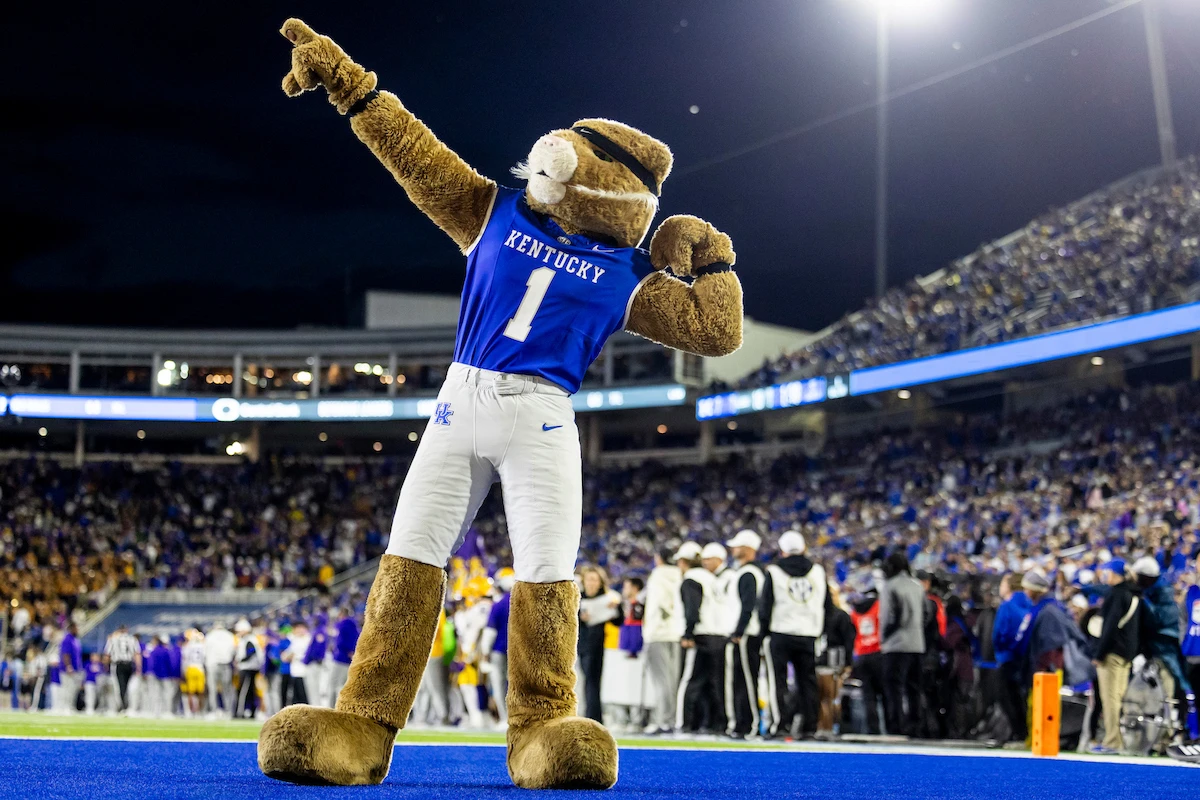
Kentucky Football has given fans plenty of reasons to be excited for the future, because after defeating Oklahoma by a score of 21-13, Will Stein’s team climbed to No. 12 in the rankings.
This win improved their record to 6-1 on the season with a 4-1 record in SEC play, now tied with the Georgia Bulldogs to be No. 1 in the conference. The ranking represents an important moment for the program, with Kentucky working to establish itself as a strong contender not only in the SEC, but in the entire sport of college football. With challenging opponents coming up, Stein and his studs have a chance to prove that they belong in the national conversation.
Advertisement
Kentucky Volleyball adds to the list of successful teams in Lexington, with this program having countlessly proved themselves throughout the years en route to a national championship and 15 total conference titles.
With the Cats being ranked No. 4 in the country, this teams gives fans another opportunity to support the blue and white beyond just football and basketball. Competing for national recognition reinforces a broader message: Kentucky athletics is about more than a single team or one turn of a season.
Kentucky Men’s Basketball remains as one of the most recognizable programs in college basketball, entering the 2026-27 season ranked No. 23 in preseason polls. Mark Pope and his team are looking to extend a tradition that has defined the program for generations, featuring eight national championships, 17 final four appearances and countless other tournament appearances. Will this be the year the Wildcats get banner No. 9?
Kentucky Women’s Basketball has been redefined in a few short years, with the Wildcats coming in ranked at No. 14 in the preseason ahead of the 2026-27 campaign. After reaching the Sweet 16 last season, Kenny Brooks is looking to build onto their recent success.
Advertisement
Both men’s and women’s basketball have showcased plenty of talent over the last two years, with both carrying high expectations within the Big Blue Nation.
Having four athletic programs receive national recognition all at the same time is a meaningful accomplishment, demonstrating how a school can thrive and build an athletic culture in more than just one sport, in a quick manner that is.
For Kentucky fans, that means more opportunities to cheer, more teams to follow and more reasons to take pride as a member of the BBN. Rankings can change weekly, but the larger story is the university’s ambition to compete at the highest level in multiple ways.
On Friday, Oct.16, the Kentucky Wildcats opened their season at Rupp Arena in an exhibition game against Little Rock, securing the first “unofficial” win with a final score of 69-49.
Kentucky shot 43.9% from the field and went 12-for-28 from three, making over half of its shots by time halftime had arrived.
Kentucky Basketball wins their first exhibition of the preseason 69-49!
– Milan Momcilovic: 16 PTS, 7 REBS – Malachi Moreno: 6 PTS, 9 REBS – Mason Williams: 10 PTS, 3 AST#BBN, what are your takeaways from seeing this team for the first time? pic.twitter.com/ZvOKXUGTzG— KY Insider (@KyInsider) October 17, 2026
Rupp was ready and electric for the first game back. Little Rock head coach Travis Ford, a member of “The Unforgettables,” even stated that Rupp “never gets old.”
Advertisement
“It doesn’t matter how many times you walk into this building,” Ford continued. “You still get goosebumps.”
To open up the game, it was obvious that the Wildcats were looking to apply defensive pressure that the team severely lacked last season.
In the first half, Kentucky grabbed 24 rebounds because of it, with seven of them coming from sophomore center Malachi Moreno. He would end his night with a near double-double, leading the charge as one of the only returning players from last year’s team.
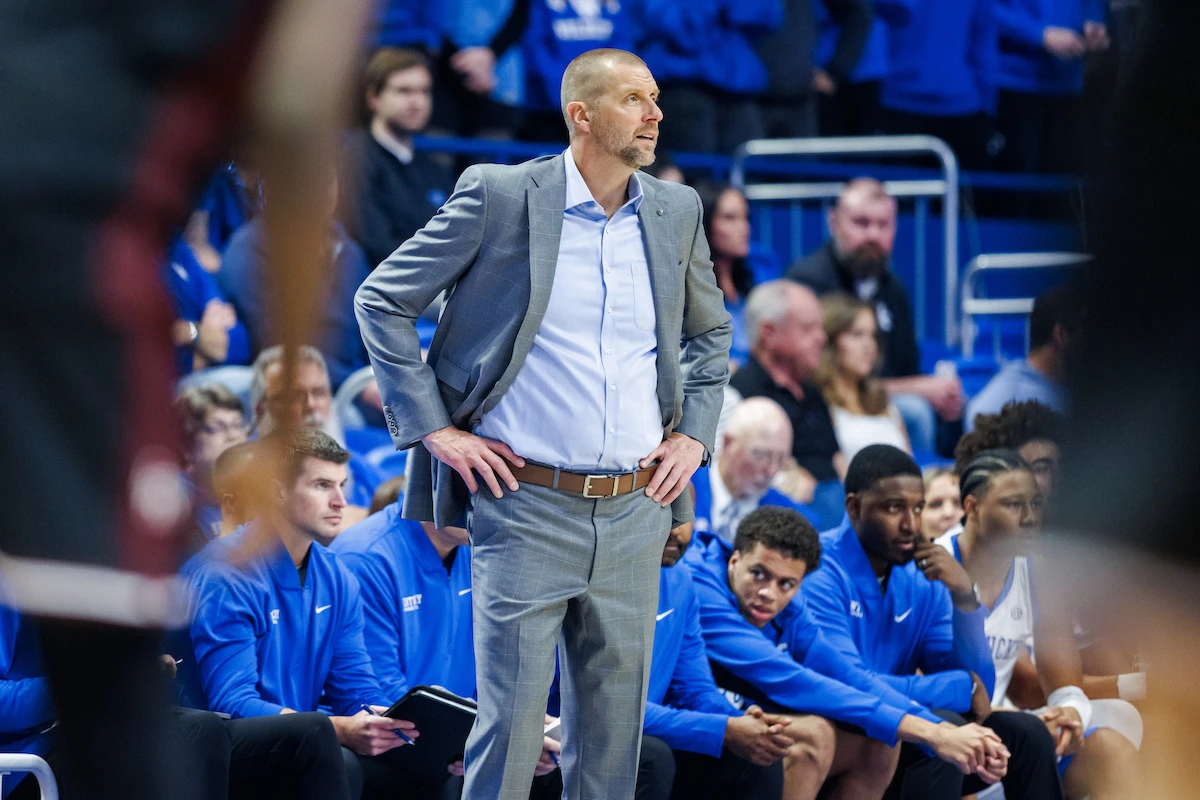
Mark Pope showcased his team’s potential to be more competitive this season by the new aggressiveness, which directly translated to opportunities on the offensive end.
Advertisement
Milan Momcilovic made several plays to capitalize off of a turnover or fastbreak, leading to a game-high 16-point performance from the star transfer.
Moreno also showcased his leadership, helping new players making their debuts find their rhythm throughout the game The center spoke out earlier in the preseason about his role in recruiting, ensuring the connection between the players is clear this season.
Kentucky gave Lexington a sneak peek of their young talent as well with Braydon Hawthorne and Mason Williams, showing fans potential for real on-court success.
Hawthorne started slowly, but transformed in the second half, ending the game with seven points and a text-book block. Looking confident on what he was doing, it was obvious that he had been in the lab this offseason.
Advertisement
Additionally, six-foot-three freshman guard Williams, son of assistant Mo Willis, finished the game with 10 points and three assists, showing a flash of the guard depth that Pope emphasized during the summer.
After the game, Pope pointed out how Williams “has a really high ceiling,” stating that he wasn’t perfect by any means, but is in the same breath capable of being productive.
Although Kentucky secured the win, this game highlighted what they can improve on while entering the season. For example, the Wildcats had 19 turnovers throughout the game and entered a rough stretch in the second half, committing four turnovers in nine minutes.
However, with a 20-point lead to end the game and a high of a 13-0 scoring run, this was a great way to kick off the basketball season.
Advertisement
The Wildcats will play in their next exhibition game against Texas Tech on Friday, Oct. 23, set to tip off at 7:00 p.m. ET from inside of Rupp Arena. With the drop of the Preseason AP Top 25 Poll next week, fans may see an early ranked matchup when the Red Raiders come to town.
Kentucky’s Milan Momcilovic isn’t letting a national ranking shake his confidence as one of college basketball’s best shooters. During the Wildcats’ 2026 Media Day, the Iowa State transfer was asked about being ranked as the third best three-point shooter in the country, despite leading the nation in shooting percentage last season.
College basketball analyst Andy Katz placed him third on his list of the nation’s top shooters, behind Buffalo’s Ryan Sabol and Nebraska’s Pryce Sandfort.
Momcilovic, however, didn’t appear too concerned about the debate and was quick to let his performance speak for itself.
Advertisement
“I just know that was clickbait,” Momcilovic said with a smile. “I just say, look at the stats. What I did last year, it says I’m the best shooter in college basketball.”
Last season, Milan Momcilovic became the first player in CBB history to lead the nation in 3P% (48.7%) and 3P made (136) in the same season.
NCAA writer Andy Katz ranked him third going into this season…
Momcilovic’s confidence is backed by an impressive statistical resume. During the 2025-26 season at Iowa State, he shot a nation-leading 48.7% from three-point range while averaging 16.9 points. He also connected on 136 three-pointers, setting a single-season program record for the Cyclones.
Despite his impressive numbers, the Kentucky forward acknowledged that even the best shooters still have some room for improvement. The lighthearted exchange offered a glimpse into his confidence and personality.
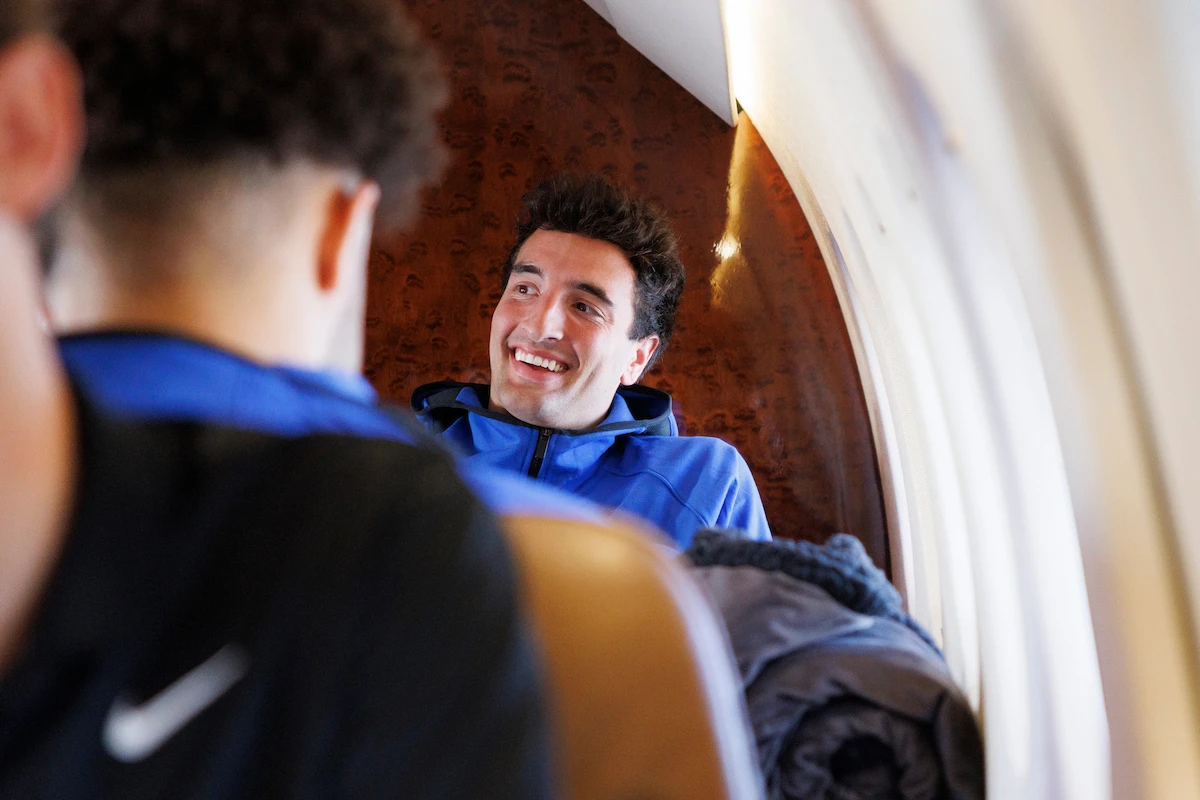
The 6-foot-8 forward joined Mark Pope’s Wildcats through the transfer portal, bringing an impressive shooting resume to a team looking to improve its perimeter offense. While national rankings may continue to spark debate, he made it clear his focus remains on letting his numbers speak for themselves as he prepares for his first season in Lexington.









 Miscellaneous1 week ago
 Football2 weeks ago
 Football2 weeks ago